
Wildfire season is not over when summer ends. In California and much of the West, plants are often at their driest in the fall, and strong, dry winds can arrive before the first steady rain or snow. A few simple steps make your home, and your neighbors' homes, much safer.
Homes in our communities often sit close together, and flying embers can travel a long way ahead of a fire. An ember that lands in dry leaves by your steps or blows under your skirting can start a fire even when the flames are far away.
Your fire season checklist.
Fire season checklist
0 of 8 done
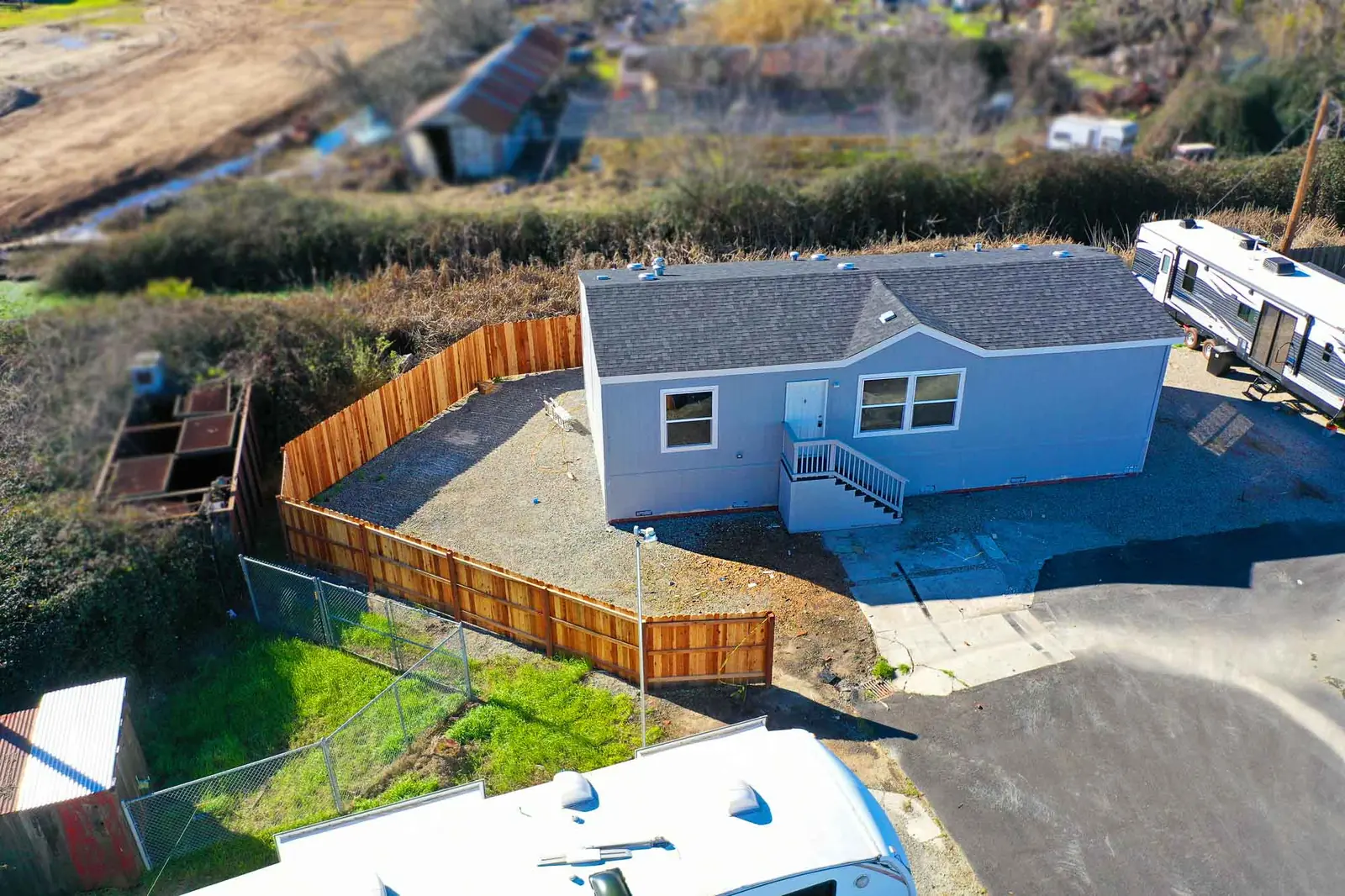
- Rake up dead leaves, pine needles and dry grass next to your walls, skirting, steps and deck. Move firewood and bark mulch away from the home. Gravel or bare ground is best in this space.
- Boxes, lumber, cardboard and gas cans stored under the home or leaning on the skirting can catch embers and feed a fire. Move them out.
- Clear pine needles and leaves off your roof, out of your gutters and from under decks, porches and stairs.
- Skirting vents and roof vents should have their metal mesh screens in place to help keep embers out. If a screen is torn, loose or missing, let your office know.
- CAL FIRE recommends 10 feet of clear space down to bare soil around propane tanks, with no flammable plants within another 10 feet. Do what your space allows, and never store anything that burns next to a tank.
- Know at least two routes out, in case one is blocked, and drive them once so they feel familiar. Keep your gas tank at least half full during fire season.
- Put together a bag you can grab in minutes: food and water for 3 days, medications, copies of important papers, a flashlight and radio with extra batteries, phone chargers, glasses, a change of clothes and supplies for your pets. Keep sturdy shoes and a flashlight by your bed.
- Many counties send evacuation warnings by text, call or email to people who sign up. Search for your county's name and "emergency alerts" to find yours.
Ticks are not saved. Print this page for a paper copy.
Living in an RV? The same steps apply to you. Keep the ground under and around your RV clear, and know how you would hitch up or drive out quickly if you had to leave.
Important
If you see fire or smoke, call 911. Do not assume someone else already has. If officials tell you to evacuate, leave right away. You do not have to wait for an order: if you feel unsafe, go early.
Learn more.
These official guides go deeper on each step:
- CAL FIRE Ready for Wildfire: defensible space, including the 5-foot ember-resistant zone.
- CAL FIRE Ready for Wildfire: create your go bag, with a full packing list.
- CAL FIRE Ready for Wildfire: Go! Evacuation Guide, for what to do when a fire is near.
- Ready.gov: wildfires, nationwide guidance for before, during and after a wildfire.
Noticed something around your community that worries you, like a pile of dry brush or a dead tree? Tell your community office.
Save these numbersTap to call
Day to day
Your community office
For day-to-day questions, start with your community's on-site office or manager.
Online
Maintenance requests
Send a maintenance request or pay rent in Resident Login, our online resident portal.
Any time
Emergency: 911
Fire, medical or gas leak: call 911.
Mon to Fri, 9 am to 5 pm
Harmony Communities office
If you can't reach your community office, or you have a question for the whole company.